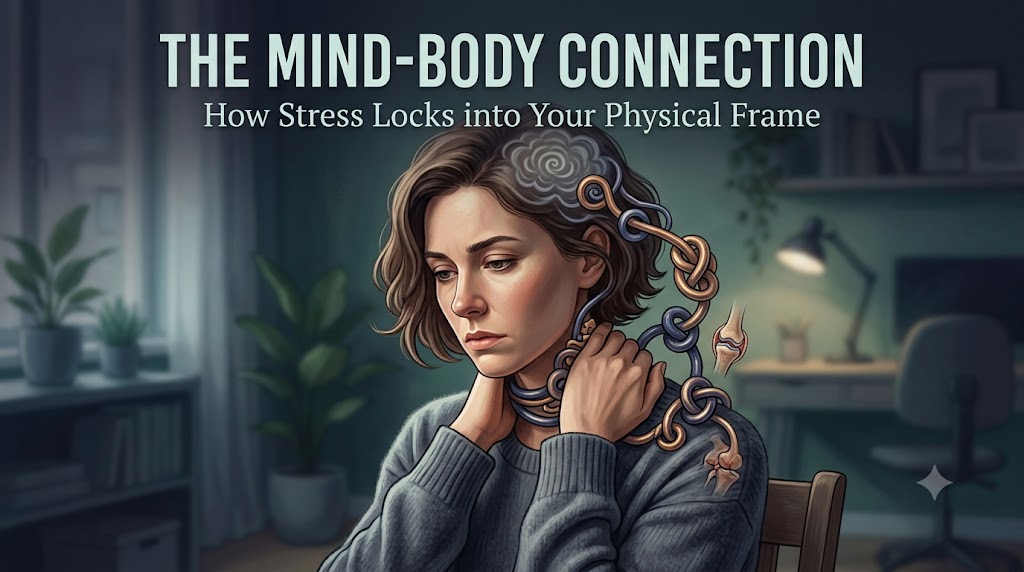
In our modern, hyper-connected world, the lines between professional duties and personal time have severely blurred. For millions of professionals, sitting at a desk for eight to ten hours a day has become the accepted norm. However, this sedentary lifestyle, combined with endless emails, looming deadlines, and constant notifications, creates a perfect storm for physical burnout and mental exhaustion. If you are desperately searching for a practical, accessible way to unwind without leaving your workspace, Chair Yoga for Stress Relief is the ultimate, science-backed solution you have been looking for.
You do not need an expensive gym membership, a specialized yoga mat, or flexible workout clothes to find your center. By integrating simple, mindful movements into your daily routine, you can completely revolutionize your approach to stress management at work and reset your entire nervous system in just five minutes. This comprehensive guide will walk you through everything you need to know to transform your workspace into a sanctuary of wellness.
The Hidden Epidemic of Workplace Burnout
Before we dive into the physical movements, it is crucial to understand exactly what happens to your body when you spend hours hunched over a keyboard. The human body was designed for dynamic movement, not for remaining in a static, seated position while staring at a glowing screen.
When you experience anxiety over a work project, your brain’s amygdala signals the release of cortisol and adrenaline. This triggers a “fight or flight” response. Because you are sitting still and not physically fighting or fleeing, this pent-up chemical energy has nowhere to go. The result? It manifests as physical tension. Your shoulders creep up toward your ears, your jaw clenches, your lower back compresses, and your breathing becomes shallow and restricted. This chronic tension restricts blood flow and oxygen to the brain, which leads to brain fog, chronic fatigue, and diminished productivity.
The Mind-Body Connection
Stress does not merely exist as an abstract concept in your mind; it physically locks into your muscles, joints, and spine. Have you ever noticed that mental exhaustion almost always feels like physical pain? The trapezius muscles in your neck and the lumbar region of your lower back act as storage centers for unexpressed anxiety.
Through mindful breathing and gentle, targeted stretching, Chair Yoga for Stress Relief acts as a physical key to unlock these deep tension points. It stimulates the vagus nerve, which runs from your brain to your abdomen, instantly triggering your parasympathetic nervous system. This sends a biological signal to your brain that you are safe, allowing your heart rate to slow down, your blood pressure to drop, and your muscles to finally let go of the tension they have been holding.
A New Era of stress management at work
Historically, corporate wellness programs focused heavily on after-hours activities or weekend retreats. However, modern research shows that micro-breaks taken throughout the day are far more effective for sustained mental health. This is where desk-based stretching truly shines.
By taking five minutes to focus on your physical alignment and breath, you are not just stretching your muscles; you are actively engaging in highly effective stress management at work. This proactive approach prevents the dreaded afternoon energy slump, boosts your immune system, and significantly improves your mood, making you a more effective and happier professional.
10 Essential office chair yoga poses to Transform Your Day
To truly experience the profound benefits of this practice, you need a practical, daily routine. Below are ten incredibly effective and simple movements designed specifically for desk workers. For the best results, perform these office chair yoga poses slowly, focusing entirely on deep, rhythmic breathing rather than how far you can stretch.
1. Seated Mountain Pose (Tadasana)
Every good yoga practice begins with grounding. Sit on the edge of your chair with your feet flat on the floor, hip-width apart. Ensure your knees are directly over your ankles. Roll your shoulders up, back, and down, opening your chest. Let your hands rest palms up on your thighs. Close your eyes and take five deep, slow breaths. This foundational pose aligns your spine and prepares your mind for the practice ahead.
2. Seated Cat-Cow Stretch (Marjaryasana-Bitilasana)
This dynamic movement is incredible for spinal health. Keep your feet flat on the floor and place your hands firmly on your knees.
- Inhale (Cow): Arch your back, drop your shoulders away from your ears, and gently look up toward the ceiling, opening your throat and chest.
- Exhale (Cat): Round your spine backward, tuck your pelvis under, and drop your chin to your chest, feeling a deep stretch between your shoulder blades. Repeat this fluid motion for five to eight full breath cycles to release lower back stiffness.
3. The Seated Spinal Twist (Ardha Matsyendrasana)
Twists are known in yoga as detoxifying movements because they massage the internal organs and release tension trapped along the spinal column. Sit sideways in your chair. Inhale deeply to lengthen your spine toward the ceiling. As you exhale, gently twist your torso toward the back of the chair, holding onto the backrest for support. Look over your back shoulder, but do not force your neck. Hold for five breaths, then slowly release and switch sides.
4. Chair Pigeon Pose (Eka Pada Rajakapotasana)
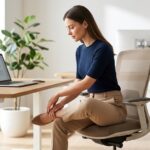
Prolonged sitting shortens and tightens the hip flexors and glutes, leading to severe lower back pain over time. While seated up tall, cross your right ankle over your left knee. Ensure your right foot remains flexed to protect your knee joint. If you feel a stretch here, stay upright. If you need a deeper sensation, keep your spine perfectly straight and gently hinge forward from your hips. Hold for ten deep breaths before switching to the left leg.
5. Seated Forward Fold (Paschimottanasana)
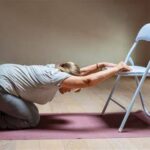
Push your chair slightly away from your desk to give yourself room. Keep your feet flat on the ground. Take a massive breath in, and as you exhale, slowly fold your torso forward over your legs. Let your arms hang heavy toward the floor, and allow your head and neck to completely relax. This inversion allows fresh, oxygenated blood to flow back into your brain, instantly calming the nervous system and relieving anxiety.
6. Neck Rolls and Ear-to-Shoulder Stretches
Our necks bear the brunt of our screen time. Drop your right ear toward your right shoulder. To deepen the stretch, extend your left arm out to the side, hovering just above the floor. Breathe deeply into the left side of your neck. Gently roll your chin down to your chest, holding for a moment, and then bring your left ear to your left shoulder. Practicing these specific office chair yoga poses daily will prevent the tension headaches that often plague computer users.
7. Eagle Arms (Garudasana)
This is a miracle stretch for the upper back and shoulder blades. Stretch your arms straight out in front of you. Cross your right arm under your left, bend your elbows, and wrap your forearms around each other to bring your palms together. Lift your elbows slightly toward the ceiling while simultaneously dropping your shoulders down away from your ears. Breathe deeply into the space between your shoulder blades for five breaths, then switch arms.
8. Seated Side Stretch (Parsva Urdhva Hastasana)
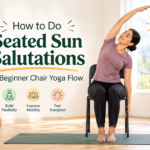
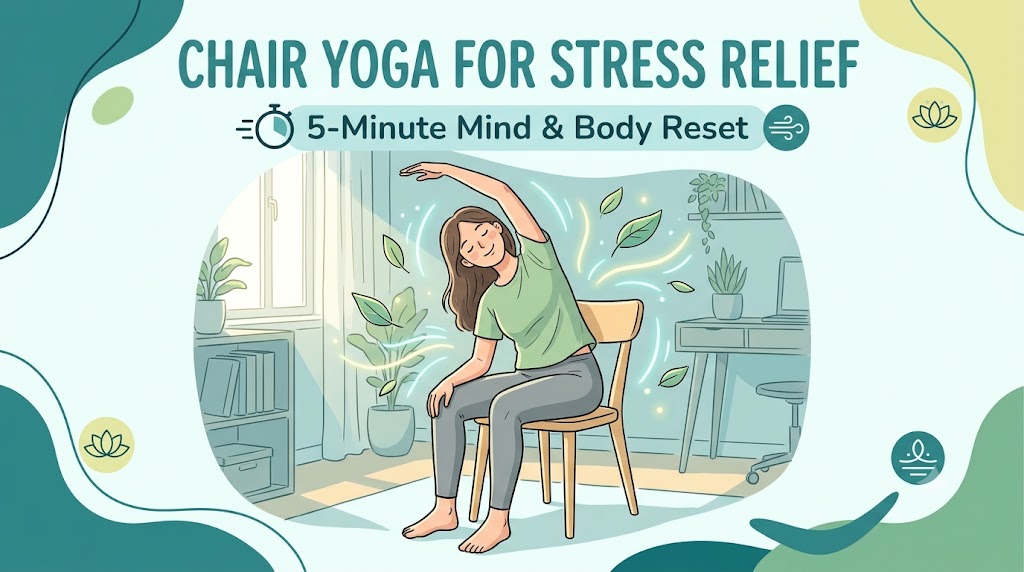
Raise both arms directly above your head, interlocking your fingers and pointing your index fingers to the sky. Inhale to reach up as high as possible, and exhale as you gently lean your torso to the right, feeling a massive stretch along the left side of your ribcage. Inhale back to the center, and exhale to the left. This opens up the intercostal muscles, allowing for deeper, more fulfilling breaths.
9. Wrist and Finger Stretches
Typing all day wreaks havoc on the delicate tendons in our hands and wrists. Extend your right arm forward with your palm facing away from you, fingers pointing up. Use your left hand to gently pull your right fingers back toward your body. Hold for three breaths. Then, point your fingers down toward the floor and pull them gently toward you again. Repeat on the other hand to prevent carpal tunnel syndrome and repetitive strain injuries.
10. Seated Savasana (The 1-Minute Desk Meditation)
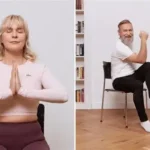
To conclude your session, sit all the way back against your chair, utilizing the backrest for support. Let your hands rest heavily in your lap, close your eyes, and take ten deep, intentional belly breaths. Scan your body from the crown of your head down to your toes, consciously commanding any remaining pockets of tension to release.
The Science Behind Chair Yoga for Stress Relief
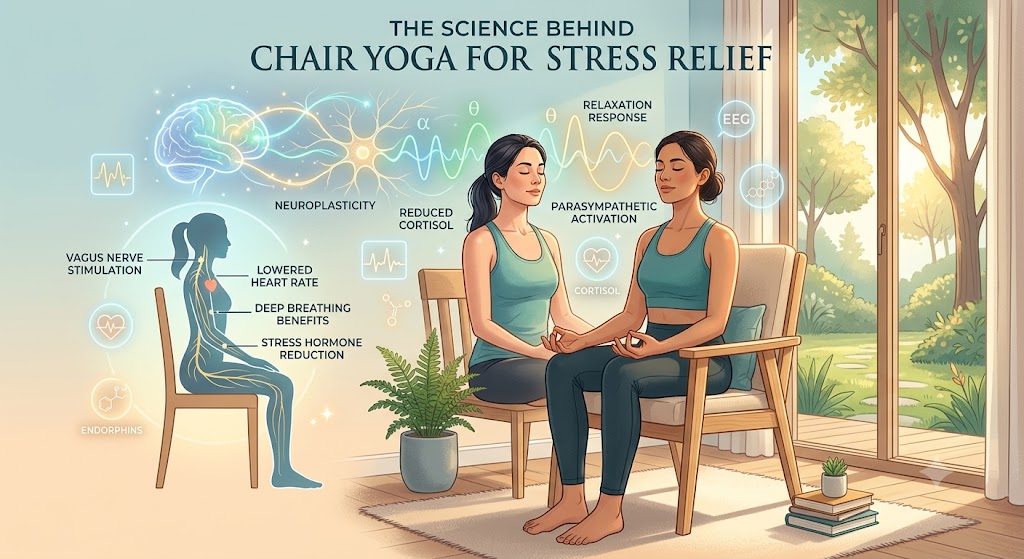
You might wonder how just a few minutes of stretching can make such a massive difference. The secret lies in the synergy between breath and movement. When you practice Chair Yoga for Stress Relief, you are engaging in a practice known as “Pranayama” (breath control) combined with “Asana” (physical posture).
According to leading health authorities, such as the Harvard Medical School’s research on Yoga and Mental Health, controlled breathing directly impacts the vagus nerve. This nerve acts as a biological brake pedal for your body’s stress response. By consciously slowing down your exhalations during these stretches, you manually override your brain’s panic signals, creating a profound sense of inner peace regardless of the chaos happening in your office.
Maximizing Chair Yoga for Stress Relief Benefits with Holistic Health
Physical stretching is only one piece of the wellness puzzle. To truly optimize your health, you must pair your movement routine with proper nutrition. A body that is inflamed from poor dietary choices will hold onto tension much longer than a well-nourished body.
Integrating antioxidant-rich, natural foods into your daily diet helps combat oxidative stress at a cellular level. For example, tropical superfruits are known for their incredible health properties. If you are interested in growing your own highly nutritious, antioxidant-packed fruits to complement your wellness journey, check out our comprehensive guides over at Dragonfruitfarmingindia.com to learn about cultivating exotic crops that benefit both your physical health and financial freedom.
Building a Consistent Daily Habit
The most beautiful routine in the world is useless if you do not actually do it. Consistency is the true secret to stress management at work. Doing a 5-minute stretching routine every single workday is exponentially more beneficial than doing a grueling 90-minute class once a month.
Here are actionable strategies to make this habit stick:
- Set a Calendar Invite: Treat your wellness break with the same respect you would give to a meeting with your boss. Block out five minutes on your calendar every afternoon at 2:00 PM.
- Habit Stacking: Attach your stretching routine to an existing habit. For instance, vow to do three stretches every time you finish your morning cup of coffee, or right before you eat your lunch.
- Create Digital Boundaries: When it is time for your stretching break, physically turn your monitor off or close your laptop. Removing the visual trigger of your work emails allows your brain to actually disconnect.
- Stay Hydrated: Keep a large bottle of water at your desk. Dehydrated muscles are tight muscles. Drinking water throughout the day ensures your joints stay lubricated and your stretches feel better.
Frequently Asked Questions (FAQs)
Q: Do I need to wear workout clothes to perform these exercises? A: Not at all! The beauty of Chair Yoga for Stress Relief is that it is completely adaptable to whatever you are wearing. Whether you are in a tailored suit, a pencil skirt, or casual Friday jeans, these movements are gentle enough that they will not ruin your clothes or make you break a sweat.
Q: How many times a day should I do these stretches? A: Ideally, you should aim for one dedicated 5-minute session per day. However, if you are feeling particularly overwhelmed, you can break it up. Performing just one or two office chair yoga poses every couple of hours is a fantastic way to keep your blood flowing and your mind sharp all day long.
Q: Can this actually help with my lower back pain? A: Yes, absolutely. Most desk-related lower back pain is caused by tight hip flexors and weak core muscles from prolonged sitting. Poses like the Seated Spinal Twist and the Chair Pigeon Pose directly target these problem areas, offering significant, natural pain relief over time.
Q: Is it okay to do this if I have never tried traditional yoga? A: Yes! This is the perfect entry point for beginners. You do not need any prior experience, flexibility, or balance to succeed. The chair provides total stability, allowing you to focus entirely on releasing tension rather than worrying about falling over.
Conclusion: Take Control of Your Well-being Today
Your physical and mental health should never be sacrificed on the altar of productivity. In fact, by taking the time to care for your body, you will actually become more focused, creative, and efficient in your professional life.
By dedicating just a few minutes of your day to Chair Yoga for Stress Relief, you are making a powerful declaration that your well-being matters. You have the tools to drastically reduce burnout, improve your posture, and reclaim your peace of mind. Start integrating these simple techniques into your routine tomorrow morning, and watch as your entire approach to stress management at work transforms for the better. Your mind, your body, and your career will thank you.