As we age, staying physically active becomes more important than ever for maintaining our independence, mobility, and overall quality of life. However, traditional workouts or floor-based yoga routines can sometimes feel too intense, intimidating, or difficult on aging joints.
This is exactly where chair yoga for seniors steps in as the perfect, accessible solution. It allows older adults to enjoy all the incredible health benefits of yoga without the fear of falling or the struggle of getting up from the floor.
If you are looking for a gentle way to stay fit, or if you are a caregiver looking for safe yoga for older adults, this comprehensive guide will walk you through everything you need to know—from the health benefits to step-by-step poses you can try today.
What is Chair Yoga?
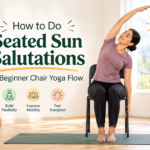
Chair yoga is a gentle and highly adaptable modification of traditional yoga. Instead of using a yoga mat on the floor, all poses and stretches are performed while seated comfortably in a chair, or while standing and using the chair for balance and physical support.
It is specifically designed so that anyone can practice it, regardless of their age, flexibility, or physical limitations. It is widely considered one of the best forms of yoga for senior citizens, especially those managing arthritis, osteoporosis, limited mobility, or those recovering from surgery.
6 Life-Changing Benefits of Chair Yoga for Seniors
Incorporating this low-impact workout into a daily routine can do wonders for both physical and mental health. Here are the most significant benefits of Chair Yoga for Seniors
1. Improves Flexibility and Range of Motion
Stiff muscles and restricted movement are common parts of aging. Gentle, consistent seated stretches help elongate muscle fibers and lubricate the joints. Chair Yoga for Seniors helps Over time, this improved flexibility makes everyday activities—like bending down to tie your shoes, reaching for a high shelf, or turning your head to check traffic—much easier and pain-free.
2. Relieves Joint Pain and Arthritis Symptoms
For those suffering from osteoarthritis, high-impact exercises like jogging or heavy weightlifting are often out of the question. Doing chair exercises for joint pain helps build strength in the muscles surrounding critical joints (like the knees, hips, and shoulders) without adding impact or pressure. This added muscle support significantly reduces joint pain and morning stiffness.
3. Enhances Balance and Fall Prevention
According to health experts, falls are a leading cause of injury among older adults. By strengthening the core abdominal muscles, legs, and ankles through seated poses and standing chair-assisted poses, seniors can naturally improve their proprioception (body awareness) and spatial balance. A stronger core directly translates to a lower risk of accidental falls.
4. Boosts Blood Circulation and Heart Health
You don’t need to run a marathon to improve your cardiovascular health. Deep breathing combined with mindful, continuous movement gets your heart pumping and blood flowing. Better circulation means more oxygen and nutrients are delivered to your brain and vital organs, which can help regulate blood pressure and keep energy levels stable throughout the day.
5. Reduces Stress, Anxiety, and Depression
Yoga is an incredible tool for mental well-being. The deep, rhythmic breathing techniques (called Pranayama) practiced during chair yoga stimulate the parasympathetic nervous system. This helps lower cortisol (the stress hormone), reduces feelings of anxiety, fights off depressive moods, and promotes better, deeper sleep at night.
6. Promotes Social Interaction
If practiced Chair Yoga for Seniors in a group class at a community center or local gym, chair yoga provides a fantastic opportunity for seniors to meet new people, socialize, and combat the feelings of isolation and loneliness that can sometimes accompany aging.
5 Easy Chair Yoga Poses for Beginners (Step-by-Step)
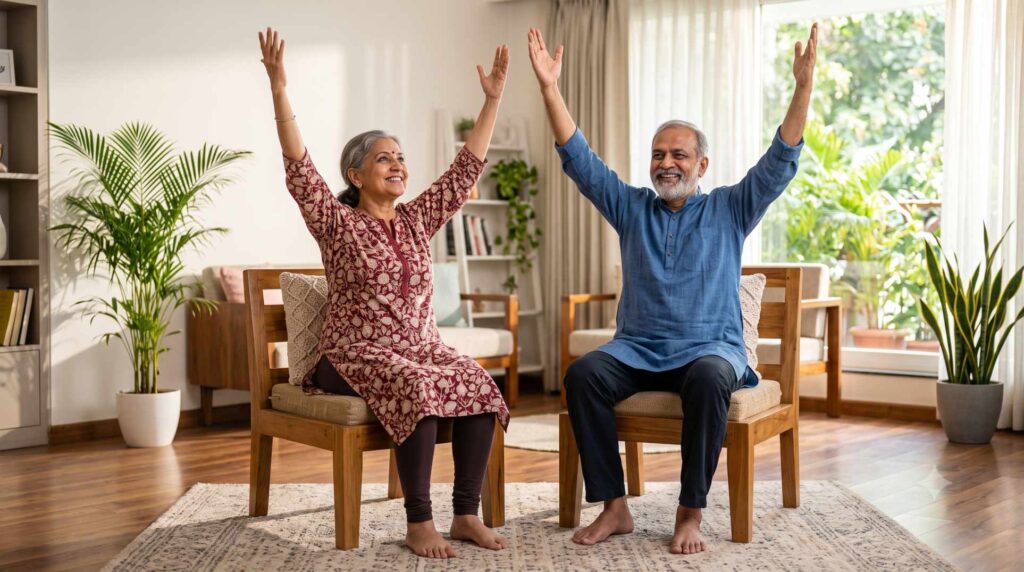
If you are ready to try seated yoga poses at home, here is a simple 10-minute sequence designed specifically for beginners.
Note: Always sit up straight, away from the backrest of the chair, with both feet flat on the floor before starting.
1. Seated Neck Stretches (For neck tension)
- How to do it: Sit up tall. Slowly lower your right ear toward your right shoulder until you feel a gentle stretch on the left side of your neck. Hold for 3-5 deep breaths.
- Next: Return to the center, and repeat on the left side. Then, slowly drop your chin to your chest to stretch the back of your neck.
2. Seated Cat-Cow (For back mobility)
- How to do it: Place your hands lightly on your knees.
- Inhale (Cow Pose): Arch your back slightly, drop your shoulders down, and look up toward the ceiling, opening your chest.
- Exhale (Cat Pose): Round your spine backward, tuck your chin to your chest, and pull your belly button toward your spine.
- Repeat this fluid motion 5 times, following the pace of your breath.
3. Seated Forward Bend (For lower back and hamstrings)
- How to do it: Inhale and sit up completely straight. As you exhale, slowly fold your upper body forward over your legs. Let your arms hang down toward the floor or rest your hands on your shins. Let your head and neck relax completely.
- Hold for 5 breaths, then slowly roll back up to a seated position.
4. Seated Spinal Twist (For digestion and spinal health)
- How to do it: Sit sideways on your chair, facing the right. Keep your feet flat on the floor. Inhale to lengthen your spine. Exhale and gently twist your torso to the right, holding onto the back of the chair with both hands for support.
- Hold for 5 deep breaths. Release, turn around to face the left side of the chair, and repeat the twist on the other side.
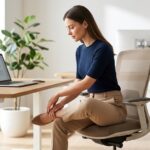
5. Chair Pigeon Pose (For hip flexibility)
- How to do it: Sit tall. Lift your right leg and place your right ankle on top of your left thigh (just above the knee). Keep your right foot flexed to protect your knee joint. If this is enough of a stretch, stay here. If you want a deeper stretch, gently lean your chest forward.
- Hold for 5 breaths, then switch legs.
Essential Safety Tips: Before You Start
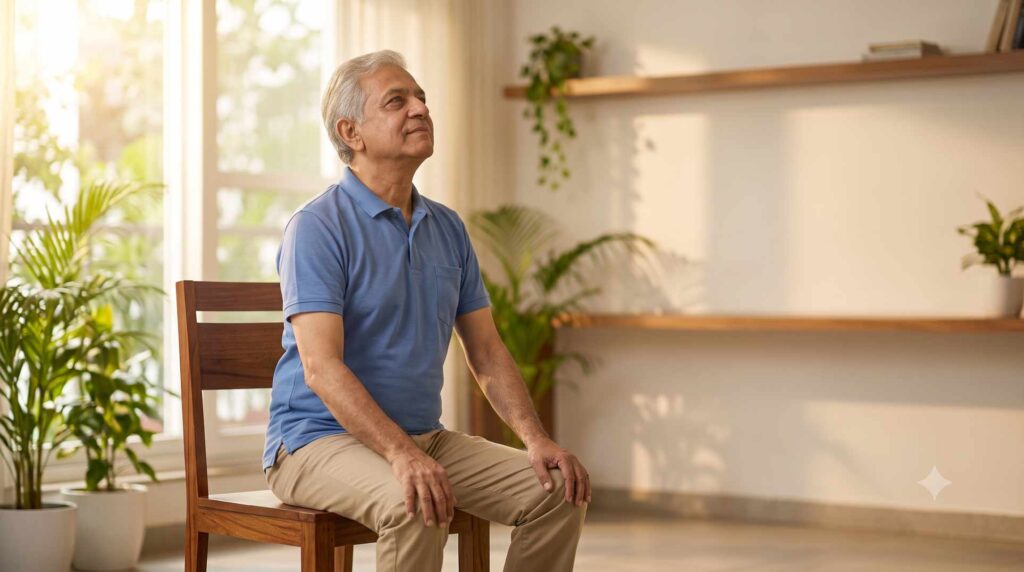
To ensure a safe and effective practice, keep this beginner’s checklist in mind:
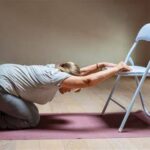
- Pick the Right Chair: Choose a sturdy, heavy, armless chair with a flat seat and a straight back (like a dining chair). Never use a chair with wheels or a folding chair that might collapse.
- Wear Comfortable Clothing: Dress in loose, breathable fabrics that allow your arms and legs to move without restriction.
- Listen to Your Body: The golden rule of yoga is to never force a pose. You should feel a gentle, satisfying stretch, but never sharp or shooting pain. If it hurts, back out of the pose immediately.
- Consult Your Doctor: If you have recently had surgery (especially hip or knee replacements) or suffer from severe medical conditions, always consult your physician before starting a new exercise routine.
Frequently Asked Questions (FAQs)
Q1: How often should seniors do chair yoga? For the best results, aim for 2 to 3 sessions per week. Even just 10 to 15 minutes a day of gentle stretching can provide massive benefits for joint mobility and mental health.
Q2: Can chair yoga help me lose weight? While it is not a high-intensity cardio workout, it does help build muscle tone, improves digestion, and reduces stress (which can prevent emotional eating). It is a great component of a broader weight management plan.
Q3: Do I need any special equipment? No! That is the beauty of this practice. All you need is a sturdy chair and comfortable clothes. Some people like to use yoga blocks under their feet if their legs are shorter, but it is not strictly necessary.
Conclusion
Staying active in your golden years shouldn’t feel like a punishment or a daunting task. Chair yoga for seniors offers a welcoming, safe, and highly effective way to keep your body moving, your joints lubricated, and your mind at peace.
Grab a sturdy chair, take a deep breath, and start your journey toward better health and independence today!