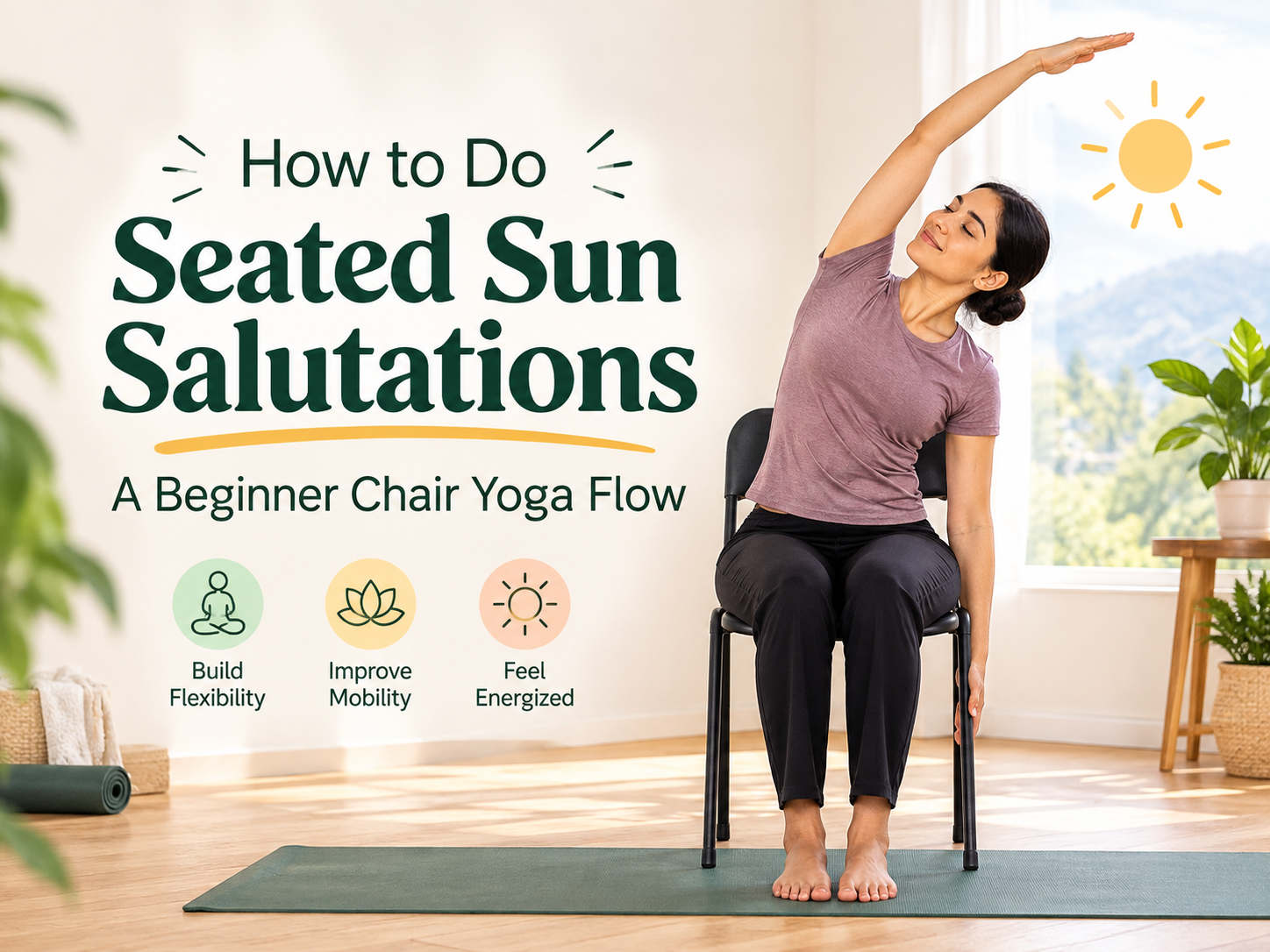
Yoga is a transformative practice, but the traditional image of complex, gravity-defying poses on a mat can be intimidating. For individuals with limited mobility, desk workers, or seniors, the barrier to entry might seem too high. However, modified practices like seated sun salutations are revolutionizing the way we approach wellness. By adapting the ancient sequence of Surya Namaskar to a sturdy chair, you can experience all the profound physical and mental benefits of a dynamic physical practice without ever needing to get down on the floor.
If you have been searching for a safe, accessible, and highly effective way to introduce mindful movement into your daily routine, a structured beginner chair yoga flow is the perfect solution. In this comprehensive 2000-word guide, we will explore the deep anatomical benefits, how to properly prepare your space, and provide a detailed, step-by-step breakdown to help you master this accessible sequence.
The Anatomy and Benefits of seated sun salutations
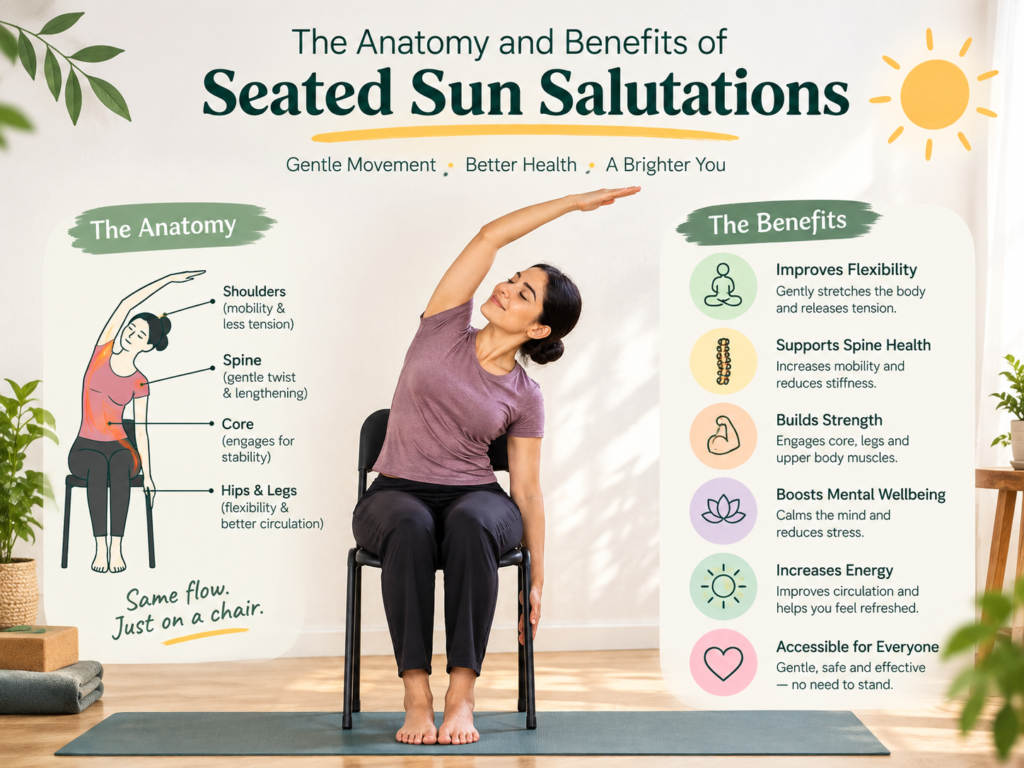
The traditional Sun Salutation is a foundational sequence in Hatha and Vinyasa yoga designed to warm up the entire body, link breath with movement, and prepare the mind for deeper meditation. When we transition these movements into a chair, we do not lose their potency; we simply change their orientation to gravity.
1. Spinal Health and Lubrication
The core of this practice involves spinal flexion (rounding forward) and extension (arching backward). This rhythmic movement acts as a pump, stimulating the flow of cerebrospinal fluid and lubricating the intervertebral discs. This is incredibly beneficial for relieving the stiff, aching back pain associated with sitting at a desk or living a sedentary lifestyle.
2. Enhanced Respiratory Capacity
In this beginner chair yoga flow, every single physical movement is meticulously paired with an inhalation or an exhalation. This synchronization forces you to use your diaphragm fully, expanding the intercostal muscles between your ribs. Over time, this increases your lung capacity, improves oxygen saturation in your blood, and helps flush out stale air trapped in the lower lobes of the lungs.
3. Nervous System Regulation
Deep, intentional breathing combined with mindful stretching stimulates the vagus nerve. This activation shifts your autonomic nervous system from the stressful “fight or flight” sympathetic state into the restorative “rest and digest” parasympathetic state, drastically lowering cortisol levels and reducing daily anxiety.
Preparing for Your beginner chair yoga flow
Success in any wellness routine begins with proper preparation. Before you begin your seated sun salutations, you must create an environment that supports safety, focus, and stability.
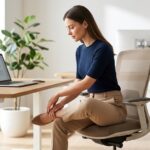
- Choose the Right Chair: This is the most critical step. You must use a sturdy, armless chair with a firm, flat seat. Dining chairs or folding chairs work best. Absolutely avoid chairs with wheels (like standard office chairs) unless the wheels can be securely locked. Do not use plush recliners or sofas, as they will cause your pelvis to tilt backward, ruining your posture.
- Footwear and Flooring: Ensure your chair is placed on a non-slip surface, such as a yoga mat or a textured rug. You can practice barefoot for better grounding, or wear flat, grippy socks.
- Wardrobe: Wear loose, comfortable clothing that allows your shoulders to reach overhead and your torso to fold forward without restriction.
- Mindset: Turn off your phone notifications. Dedicate these 10 to 15 minutes entirely to yourself.
Step-by-Step Guide to seated sun salutations
Now, let’s dive into the physical practice. Move slowly, listen to your body’s unique limitations, and never push past a gentle stretch into sharp pain.
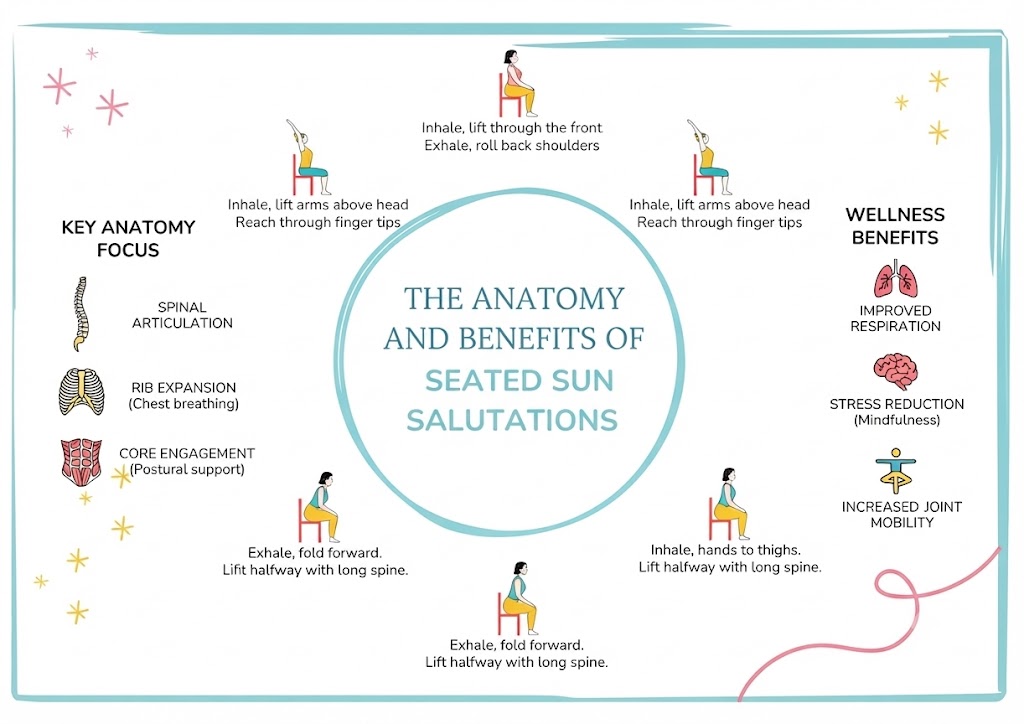
Step 1: Seated Mountain Pose (Tadasana)
Every great beginner chair yoga flow begins with grounding and finding your center.
- Sit forward on the edge of your chair so your back is not touching the backrest.
- Plant your feet firmly on the ground, exactly hip-width apart. Ensure your ankles are directly below your knees, creating a 90-degree angle.
- Press your sit bones deeply into the chair, lengthen your spine upward toward the ceiling, and gently roll your shoulders down and back.
- Rest your hands lightly on your thighs, palms facing down for grounding or up for receiving energy.
- Action: Take three deep, grounding breaths here.
Step 2: Upward Salute (Urdhva Hastasana)
- Action: As you take a deep, slow inhale, sweep your arms out to the sides and reach them high above your head.
- Keep your shoulders relaxed and away from your ears. If your neck allows, gently tilt your chin up to look at your thumbs.
- Feel the deep stretch along the lateral sides of your torso and your ribcage expanding.
Step 3: Seated Forward Fold (Uttanasana)
- Action: As you powerfully exhale, hinge forward from your hips (not your waist). Swan-dive your arms down alongside your legs.
- Let your chest rest toward or on your thighs. Allow your hands to reach toward your shins, ankles, or the floor, depending entirely on your current flexibility.
- Let your head and neck hang completely heavy, releasing all tension in your cervical spine.
Extra Tip for seated sun salutations: If you have high blood pressure, vertigo, or glaucoma, do not drop your head below your heart. Instead, rest your forearms on your thighs and keep your head aligned with your spine.
Step 4: Halfway Lift (Ardha Uttanasana)
- Action: Inhale and slide your hands up to your shins or your knees.
- Press into your hands to lift your chest and head away from your thighs until your back is perfectly flat and parallel to the floor.
- Squeeze your shoulder blades lightly together on your back, looking slightly forward to keep your neck long.
Step 5: Seated Forward Fold (Uttanasana)
- Action: Exhale and release completely back down into your deep forward fold, letting the spine round naturally and the head hang heavy.
Step 6: Seated Cobra Pose (Bhujangasana Variation)
In a standard beginner chair yoga flow, we replace the traditional floor-based Cobra with a seated chest expansion.
- Action: Inhale as you roll your spine upright. Plant your hands firmly on your knees or grasp the side edges of your chair seat.
- Push your chest proudly forward and upward, arching your mid-back.
- Draw your elbows back behind you and lift your gaze gently toward the ceiling. Feel the broad opening across your collarbones and heart center.
Step 7: Seated Downward-Facing Dog Variation
- Action: Exhale and transition into a counter-stretch. Extend both legs out in front of you, heels on the floor, toes pointing up.
- Reach both arms straight out in front of you at shoulder height, or slightly higher, as if you were pushing against an invisible wall.
- Tuck your chin slightly and hollow out your belly, feeling a stretch down the entire backline of your body.
Step 8: Return to Upward Salute
- Action: Inhale deeply, bend your knees to bring your feet flat back to their starting position, and dynamically sweep your arms all the way back up overhead, just as you did in Step 2.
Step 9: Return to Mountain Pose
- Action: Exhale and slowly float your arms down to your sides, bringing your hands back to rest gently on your thighs.
- Close your eyes and take a moment to notice how your body feels after completing one full round.
Common Mistakes in seated sun salutations
Even though this practice is highly modified, it is still possible to develop bad habits. Be mindful of these common pitfalls:
- Holding the Breath: The most crucial element of a beginner chair yoga flow is the breath. Moving without breathing turns yoga into simple calisthenics. Always let the length of your breath dictate the speed of your physical movement.
- Slouching in the Chair: Relying on the chair’s backrest shuts off your core muscles. You must sit on the edge of the seat to force your abdominal muscles and spinal erectors to do the work of keeping you upright.
- Forcing Flexibility: Never aggressively pull yourself into a forward fold or yank your neck into a backbend. The goal is gentle, sustainable mobility, not immediate acrobatics.
Conclusion
Incorporating mindful movement into your day does not require an expensive studio membership, complicated equipment, or intense physical strain. By learning how to practice seated sun salutations, you grant yourself a powerful, accessible tool to combat joint stiffness, relieve mental stress, and build functional core strength. Start with just three to five rounds of this sequence every morning or during your midday work break. With consistent dedication, this gentle practice will profoundly enhance your posture, your breathing patterns, and your overall quality of life.
Frequently Asked Questions (FAQs)
1. How many rounds should I do as a beginner? If you are completely new to this, start with 3 to 5 full rounds. Focus entirely on the quality of your breath and the alignment of your spine rather than the quantity of rounds. As your endurance naturally improves, you can gradually increase this to 10 or 12 rounds.
2. Can I do this practice if I am in a wheelchair? Absolutely. The sequence is highly adaptable. As long as your wheelchair is securely locked and stable, you can perform all the upper body and spinal movements. Skip the leg extensions if they are not accessible, and focus deeply on the spinal flexions, chest expansions, and breathwork.
3. Will this help me lose weight? While this specific routine is not a high-intensity cardiovascular workout designed for massive calorie burning, it absolutely supports weight loss indirectly. It dramatically lowers cortisol (the stress hormone linked to belly fat retention), improves your mind-body connection (which helps prevent emotional eating), and gently builds lean muscle tone in the core and back.
4. When is the best time of day to practice? Traditionally, this sequence is performed at sunrise to welcome the new day and energize the body. However, the true “best” time is whenever you can do it consistently. Many desk workers find that doing a quick five-minute round at 2:00 PM is the perfect way to beat the afternoon energy slump and relieve back tension.





1 thought on “How to Do seated sun salutations: A beginner chair yoga flow”