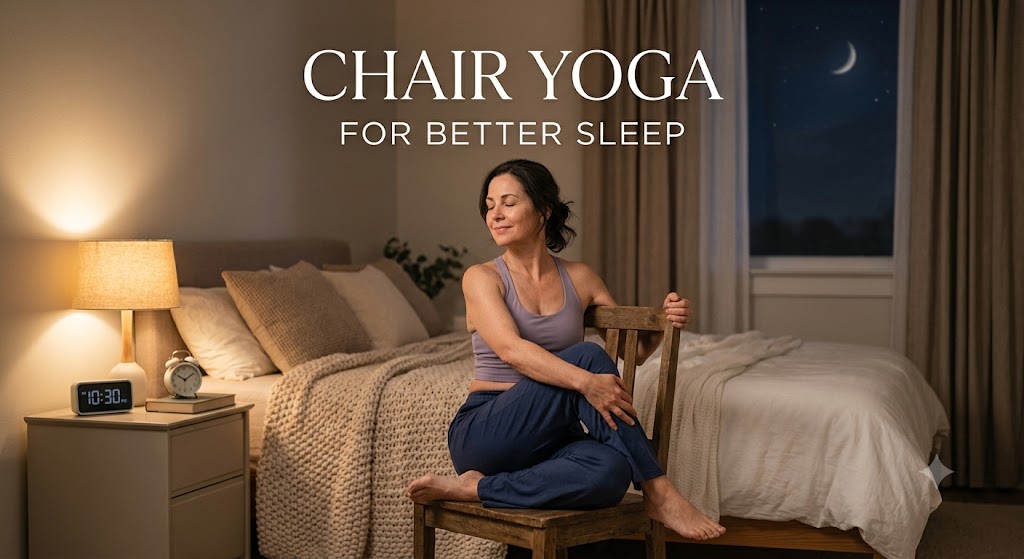
Tossing and turning all night has become a deeply frustrating reality for far too many people today. Watching the clock tick past midnight, then 2 AM, while your mind races is an exhausting experience that ruins the following day. If you are struggling with insomnia, finding a natural, sustainable way to wind down is essential. While traditional floor exercises are heavily promoted for relaxation, getting down on a hard mat isn’t always appealing—or physically possible—at the end of a long, draining day.
That is the beauty of chair yoga for better sleep. You can do it right in your bedroom, sitting on the edge of your bed or in a comfortable armchair, while wearing your pajamas. Incorporating a simple, targeted stretching routine helps transition your nervous system from high alert to deep relaxation, offering a practical escape from sleeplessness.
Understanding Insomnia and the Need to Unwind
Insomnia is significantly more complex than just missing a few hours of shut-eye; it is a vicious cycle of physical tension and mental overactivity. Throughout the day, work stress, poor posture at your desk, and late-night screen time keep your body’s sympathetic nervous system (your “fight or flight” mode) engaged. This keeps your cortisol levels abnormally high and your muscles physically tight.
To break this cycle, you need a distinct physical cue that tells your brain it is entirely safe to shut down for the night. Practicing chair yoga for better sleep acts as that exact trigger. It gently releases the physical stiffness accumulated throughout the day, particularly in the upper body where most stress is stored. By intentionally slowing your breathing and lowering your resting heart rate, this holistic approach naturally combats sleep deprivation and actively encourages your brain to produce melatonin, the crucial hormone responsible for regulating your sleep-wake cycle.
Why is This the Perfect Evening Solution?

You might logically wonder if exercising right before bed will wake you up rather than put you to sleep. The difference lies entirely in the intensity and intention behind the movements. While a heavy gym workout or a fast-paced cardio session stimulates your nervous system and raises your core temperature, a dedicated bedtime chair yoga sequence does the exact opposite. It focuses purely on gentle spinal decompression and mindful, rhythmic breathing to soothe the body.
Here is why this method is considered a game-changer for sleep hygiene:
- Highly Accessible for Everyone: You do not need to be inherently flexible, young, or athletic to start. It is perfectly suited for absolute beginners, chronically stiff office workers, and senior citizens alike.
- Zero Special Equipment Needed: You do not need expensive props, blocks, or straps. A sturdy seat is all that is required.
- Immediate Physical Tension Release: Chair yoga for better sleep heavily targets the specific areas where we subconsciously hold the most daily stress, particularly the back of the neck, the jawline, and the shoulders.
- Calms a Racing Mind: The slow, mindful, and highly repetitive nature of the movements helps quiet racing thoughts, easing the nighttime anxiety that often accompanies chronic insomnia.
5 Must-Do Poses for Your Evening Routine
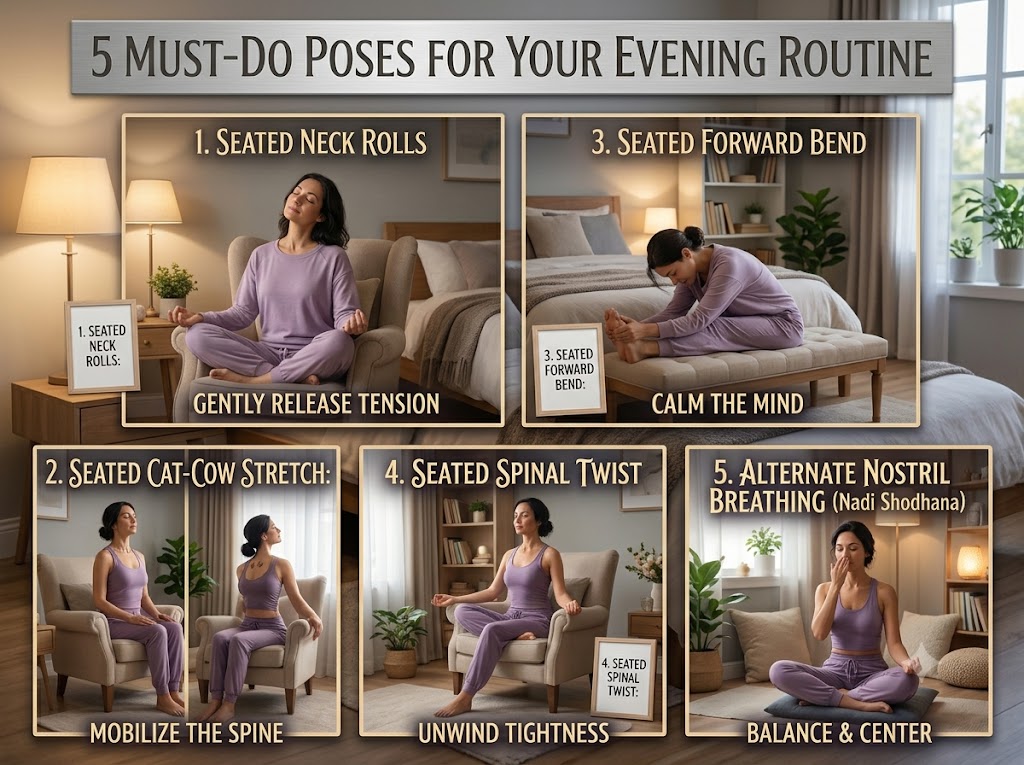
Dim the overhead lights in your bedroom, switch on a warm bedside lamp, put your phone on silent, and try this specific sequence about 30 to 45 minutes before you plan to sleep. This specific bedtime chair yoga routine is carefully designed to cure insomnia naturally by systematically targeting physical knots and mental stress.
1. Seated Neck Rolls
Staring at screens, monitors, and smartphones all day builds immense, rigid tension in the upper back and neck, which frequently causes tension headaches that keep you awake.
- How to do it: Sit up completely straight, rest your hands lightly on your lap, close your eyes, and gently roll your head in slow, wide circles. Do five rotations clockwise, then switch to five rotations counter-clockwise.
- Why it works: Doing this as part of your chair yoga for better sleep routine instantly signals your brain to let go of the day’s posture-related stress. It requires minimal physical effort but delivers immediate, soothing relief.
2. Seated Cat-Cow Stretch
Your spine needs to thoroughly decompress before you lie down flat in a bed for eight hours.
- How to do it: Rest your hands firmly on your kneecaps. Inhale deeply, arch your lower back, push your chest forward, and look up slightly toward the ceiling (Cow pose). Exhale slowly, round your spine backward, and tuck your chin deeply toward your chest (Cat pose). Repeat this fluid, rocking motion 10 times.
- Why it works: This rhythmic movement directly stimulates the vagus nerve and activates the parasympathetic nervous system, making your bedtime chair yoga session deeply restorative for your central nervous system.
3. Seated Forward Bend
If you have a racing, overactive mind that simply won’t shut off, this inversion pose is an absolute necessity.
- How to do it: Scoot forward to the edge of your seat, plant your feet flat on the floor shoulder-width apart, take a deep breath in, and exhale as you fold your torso completely over your thighs. Let your head, neck, and arms hang heavy toward the floor like a ragdoll. Hold this for one to two minutes, taking slow, deep breaths into your lower back.
- Why it works: Holding this pose is a cornerstone of chair yoga for better sleep because it directs fresh, oxygenated blood flow directly to the brain, which acts as a natural sedative for severe anxiety.
4. Seated Spinal Twist
A tight, aching lower back can easily ruin a good night’s rest, forcing you to constantly shift positions in bed to find comfort.
- How to do it: Sit tall and inhale. As you exhale, slowly twist your torso to the right side, using the backrest of the seat for very gentle leverage. Look over your right shoulder. Hold for five deep breaths, slowly return to the center, and switch to the left side.
- Why it works: Including this in your bedtime chair yoga practice releases lumbar stiffness and subtly massages the internal organs. This actively aids digestion, which is crucial since late-night indigestion frequently disrupts rest.
5. Alternate Nostril Breathing (Nadi Shodhana)
While technically a breathwork (pranayama) exercise rather than a physical stretch, no relaxation routine is complete without it.
- How to do it: Close your right nostril with your right thumb and inhale deeply through the left nostril. Pinch the left nostril closed with your ring finger, release the thumb, and exhale fully through the right nostril. Inhale through the right, switch, and exhale through the left. Continue this loop for five minutes.
- Why it works: This specific breathing technique biologically balances the brain’s left and right hemispheres. It is the perfect grand finale for your chair yoga for better sleep routine, leaving your nervous system completely grounded and ready for sleep.
Real-Life Examples: Changing Lives Naturally
Sometimes, hearing about real, practical results makes all the difference when trying a new holistic remedy. Let’s look at how this simple evening practice has successfully helped individuals overcome long-standing sleep struggles without relying on pharmaceuticals.
The Stressed Corporate Worker Mark, a 34-year-old software developer, struggled with severe, chronic insomnia due to 10-hour daily shifts hunched over a laptop. Relying on over-the-counter sleeping pills left him groggy, unfocused, and heavily fatigued the next morning. After researching natural remedies, he committed to a 15-minute bedtime chair yoga routine every single night before brushing his teeth. Within two weeks of consistent practice, the muscular knots in his shoulders dissolved, and his natural sleep cycle successfully returned.
The Senior Citizen Seeking Relief Sarah, aged 68, found getting down on a traditional floor mat too painful for her arthritic knees and hips, which only worsened her nighttime anxiety and frustration. By sitting in her favorite padded armchair and practicing simple stretches while listening to calming music, she finally found relief from both her joint stiffness and her insomnia. Her story highlights exactly how adaptable and accessible chair yoga for better sleep truly is for all ages, body types, and mobility levels.
Tips to Maximize the Benefits
To get the absolute maximum return on your evening routine, you should strategically combine your stretches with a few smart, science-backed lifestyle tweaks:
- Cut the Caffeine Early: Avoid drinking coffee, strong energy drinks, or heavily caffeinated teas after 2 PM to ensure your system is completely clear of artificial stimulants by nightfall.
- Ditch the Screens: Stop scrolling on your phone or watching television at least an hour before you start stretching. Blue light suppresses the sleep hormone melatonin, counteracting your relaxation efforts.
- Set the Ideal Mood: Keep your bedroom slightly cool, pitch dark, and as quiet as possible. You can also consider diffusing lavender or chamomile essential oils to heavily enhance the sensory atmosphere of your room.
- Maintain Strict Consistency: Do not expect a flawless miracle on night one. Making chair yoga for better sleep a non-negotiable daily habit is the real secret to curing insomnia permanently and training your brain to sleep on command.
Sleep is not a luxury; it is a fundamental biological necessity required for cellular repair, memory consolidation, and emotional regulation. When you are exhausted but your brain refuses to shut down, trying to force sleep by tossing and turning rarely works. Instead of lying awake in rising frustration, give this gentle, methodical approach an honest try. By taking just 15 minutes to sit down, breathe deeply, and intentionally release the physical tension of the day, you send a powerful, undeniable message to your body that it is safe to rest. Implementing bedtime chair yoga into your nightly routine is a simple, highly effective way to naturally reclaim your nights and wake up feeling genuinely restored.
Frequently Asked Questions (FAQs)
Q1. Can this practice actually cure chronic insomnia? Yes, it can be highly effective for long-term management. Engaging in chair yoga for better sleep activates the parasympathetic nervous system, which directly lowers circulating cortisol levels and reduces your resting heart rate, naturally addressing the root physiological causes of insomnia over time.
Q2. What type of seat should I optimally use for these stretches? You should use a sturdy, armless dining or office seat without rolling wheels. You need to ensure your feet can plant firmly and flatly on the floor at a 90-degree angle to maintain strict stability and spinal alignment during the movements.
Q3. Should I do these stretches if I wake up in the middle of the night? Absolutely. If you wake up at 3 AM and cannot easily fall back asleep within twenty minutes, staying in bed can create anxiety. Sitting up on the edge of your mattress and implementing a quick bedtime chair yoga sequence can help calm your racing mind faster than staring at the ceiling in the dark.
Q4. Is it safe for seniors with pre-existing mobility issues? Yes, these seated stretches are exceptionally safe because they entirely remove the risk of falling or putting excess body weight on sensitive joints like the knees and wrists. Always listen strictly to your body and never stretch past the point of pain. Ultimately, chair yoga for better sleep adapts seamlessly to your personal physical limits, making it the perfect wind-down tool for anyone seeking better rest.
1 thought on “Chair Yoga for Better Sleep: Bedtime Routines and Gentle Stretches to Cure Insomnia”