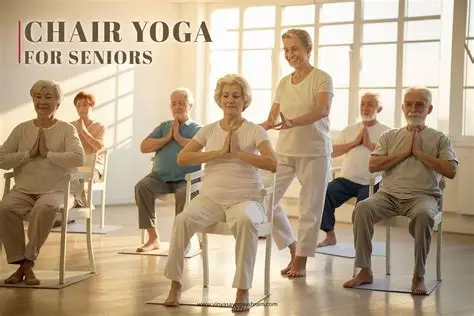
Aging is a natural, evolving physical journey. Over time, many older adults experience joint stiffness, reduced muscle elasticity, and a lingering fear of losing stability. However, declining mobility is not an inevitable outcome of getting older. While traditional mat-based yoga can be intimidating—often demanding rapid floor transitions, deep kneeling, or risky balance maneuvers—it frequently alienates those who need movement the most.
This is where Chair Yoga for Seniors bridges the gap. By using a stable chair as an accessible foundation, this practice delivers the proven benefits of classical yoga without unnecessary joint impact or fall hazards. Integrating these structured, Gentle Mobility Exercises into a daily routine allows older adults to preserve their physical independence, sharpen balance, soothe chronic joint discomfort, and nurture emotional calm.
What Is Chair Yoga and Why Is It Vital for Aging Bodies?
Chair yoga is an adapted form of classical Hatha yoga where every posture is performed either while seated or while standing using the chair frame for support. It removes the stress of getting down to and up from the floor, transforming movement into an inviting, sustainable daily habit.
As the human body ages, several physiological changes take place:
- Synovial Fluid Depletion: The natural lubricant within joint capsules thins, causing cartilage friction, stiffness, and arthritis flares.
- Loss of Proprioception: The neural pathways that tell your brain where your limbs are positioned in space gradually slow down, increasing the risk of missteps and falls.
- Postural Kyphosis: Weakening thoracic extensors and prolonged sitting often lead to rounded shoulders, compressed lung capacity, and shallow breathing.
Chair Yoga for Seniors directly targets these vulnerabilities. Gentle, rhythmic movement pumps fresh blood and synovial fluid across joint surfaces, while upright spinal alignment cues open the rib cage to improve oxygen uptake and core stabilization.
Core Health Benefits: Backed by Science
Consistent, seated mindful movement delivers systemic physiological benefits that extend far beyond simple stretching:
- Joint Lubrication & Pain Relief: Controlled movement cycles encourage synovial fluid circulation through cartilage in the knees, hips, and shoulders, significantly reducing morning stiffness and osteoarthritis aches.
- Enhanced Balance and Fall Prevention: Chair-assisted standing poses strengthen the stabilizing muscles of the ankles, calves, and hips, refining proprioceptive reflexes to prevent falls.
- Cardiovascular & Lymphatic Drainage: Active ankle pumps, seated leg extensions, and torso twists assist venous blood return to the heart, mitigating fluid pooling (edema) in lower extremities.
- Down-Regulation of Stress (Vagus Nerve Stimulation): Coordinating diaphragmatic breathing with slow, deliberate physical transitions stimulates the parasympathetic nervous system, lowering resting heart rate, cortisol levels, and chronic anxiety.
- Retention of Functional Independence: Preserving shoulder mobility, spinal rotation, and grip strength directly translates into easier execution of daily tasks—such as fastening seatbelts, reaching top shelves, and buttoning shirts.
Comparative Analysis: Modality Breakdown
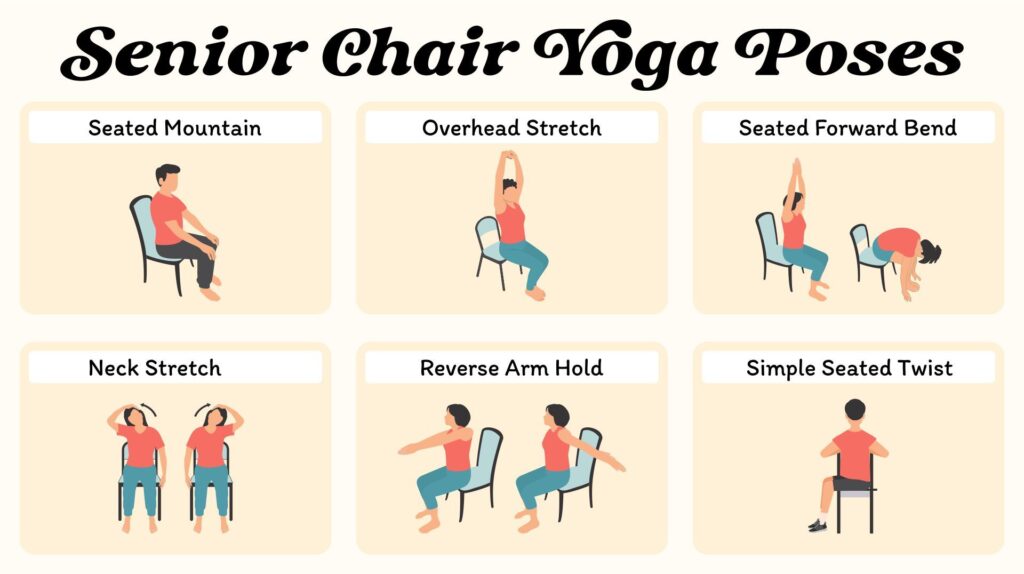
To understand why seated functional movement works so well for aging anatomy, consider how chair yoga compares against standard physical activities:
| Metric / Parameter | Traditional Mat Yoga | Casual Walking | Chair Yoga for Seniors |
| Joint Load & Impact | High (demanding on wrists, knees, hips) | Moderate (repetitive ground strike on joints) | Minimal to Zero (non-weight-bearing options) |
| Fall / Injury Risk | Moderate to High (unassisted balance work) | Low to Moderate (uneven outdoor terrain) | Extremely Low (grounded, stable chair base) |
| Spinal Range of Motion | Full (includes aggressive floor backbends) | Minimal (limited to linear planes) | Balanced & Safe (axial extension, twists) |
| Focus / Primary Outcome | Flexibility, core torque, strength | Cardiovascular base, leg endurance | Gentle Mobility Exercises, independence |
| Adaptability Level | Rigid entry barrier for limited mobility | Fixed functional movement | Fully customized to individual capabilities |
The Structured Routine Flowchart
A safe chair yoga session follows an intentional physiological progression: moving from internal breath awareness to joint articulation, core integration, and a quiet, restorative close.
+--------------------------------------------------------------------+
| 1. Grounding & Pranayama (Breath Awareness)                        |
|    - 3 to 5 Minutes: Seated tall, feet flat, deep diaphragmatic flow|
+---------------------------------+----------------------------------+
                                  |
                                  v
+---------------------------------+----------------------------------+
| 2. Cervical & Shoulder Articulation (Upper Extremity)              |
|    - Neck half-circles, shoulder rolls, wrist spirals              |
+---------------------------------+----------------------------------+
                                  |
                                  v
+---------------------------------+----------------------------------+
| 3. Spinal Mobilization (Multi-Planar Movement)                     |
|    - Seated Cat-Cow, supported side stretches, gentle axial twists |
+---------------------------------+----------------------------------+
                                  |
                                  v
+---------------------------------+----------------------------------+
| 4. Pelvic & Lower Kinetic Chain (Hips, Knees, Ankles)              |
|    - Seated Pigeon, knee-to-chest lifts, seated heel-toe pumps     |
+---------------------------------+----------------------------------+
                                  |
                                  v
+---------------------------------+----------------------------------+
| 5. Optional Chair-Supported Standing Balance                       |
|    - Supported Mountain, assisted Tree Pose, calf raises           |
+---------------------------------+----------------------------------+
                                  |
                                  v
+---------------------------------+----------------------------------+
| 6. Integration & Cool Down (Seated Savasana)                       |
|    - Complete muscular relaxation, natural breath observation      |
+--------------------------------------------------------------------+
7 Essential Chair Yoga Poses for Daily Vitality
Perform each posture with calm, rhythmic breathing. Inhale through the nose to expand the belly and ribcage; exhale fully without straining. Never force a joint past its natural, pain-free range of motion.
1. Seated Mountain Pose (Chair Tadasana)
The foundational posture for setting proper alignment, decompressing the spine, and activating the postural stabilizers.
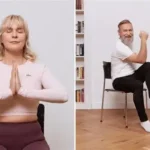
- How to Perform: Sit toward the front third of the chair so your back is self-supported. Plant both feet flat on the floor, hip-width apart, ensuring your knees form a clean 90-degree angle over your ankles. Rest your palms on your thighs. Draw your navel gently toward your spine, roll your shoulders up, back, and down, and reach the crown of your head toward the ceiling.
- Anatomical Target: Aligns spinal vertebrae, opens the chest cavity, and activates the deep transverse abdominis.
2. Seated Cat-Cow Stretch (Marjaryasana-Bitilasana)
A fluid vinyasa movement designed to restore sagittal mobility to the spine while coordinating breath with motion.
- How to Perform: Place your hands securely on your kneecaps. On an inhale, draw your chest forward between your upper arms, gently arch your middle and upper back, and look slightly upward (Cow). On an exhale, reverse the curve: tuck your tailbone, round your spine backward toward the chair back, and gently lower your chin to your chest (Cat). Repeat for 5 to 8 slow breath cycles.
- Anatomical Target: Mobilizes the thoracic and lumbar spine, relieves back fatigue, and aids digestion through abdominal massage.
3. Seated Spinal Twist (Ardha Matsyendrasana Variation)
A non-compressive axial twist that gently mobilizes the spine, releases the lower back, and stimulates healthy circulation through the digestive tract.
- How to Perform: Sit tall in Mountain Pose. Inhale to lengthen the spine. On your exhale, gently twist your torso toward the right side. Place your left hand across to the outside of your right knee, and rest your right hand on the side or back of the chair seat. Keep both sit bones grounded evenly; twist from your core and ribs rather than pulling with your arms. Hold for 3 to 5 smooth breaths, unwind, and repeat on the left side.
- Anatomical Target: Restores rotational elasticity to the trunk and relieves stiffness along the erector spinae.
4. Seated Forward Fold (Ardha Uttanasana)
A gentle inversion that relaxes the central nervous system, lengthens the posterior chain, and encourages circulation to the brain.
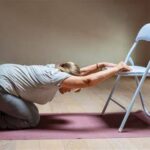
- How to Perform: Widen your feet slightly past hip-distance for stability. Place your hands on your thighs. Inhale deeply; on the exhale, hinge forward from the hips with a long spine, sliding your hands down your shins or resting your forearms on your thighs. Let your head hang naturally if your neck is comfortable.
- Safety Cue: If you have glaucoma, severe untreated hypertension, or inner ear vertigo, avoid lowering your head below heart level. Keep your torso propped on your forearms at a 45-degree angle instead.
5. Seated Pigeon Pose (Eka Pada Rajakapotasana Variation)
A premier stretch for counteracting hip tightness caused by prolonged sitting, walking fatigue, or sciatic discomfort.
- How to Perform: Ground your left foot firmly. Lift your right leg, bend the knee, and rest your right ankle across your left thigh, just above the knee (forming a figure-4 shape). Flex your right foot gently to stabilize the knee joint. Sit upright; if this provides a sufficient stretch along your outer hip, stay here. If comfortable, hinge forward a few inches from your hips with a flat back. Hold for 30 to 45 seconds, breathing deeply, then swap sides.
- Anatomical Target: Gluteus medius, piriformis muscle, and external hip rotators.
6. Seated Eagle Arms (Garudasana Arms)
A targeted upper-body pose that releases chronic tightness in the upper back, shoulders, and scapular stabilizers.
- How to Perform: Extend your arms straight out in front of you at shoulder height. Cross your right arm over your left arm, bending at the elbows. Either bring the backs of your hands together or wrap your forearms fully to bring palms together. Lift your elbows toward shoulder height while keeping your shoulders relaxed down away from your ears. Hold for 4 to 6 breaths, feeling your upper back expand, then switch arms.
- Anatomical Target: Trapezius, rhomboids, and rear deltoids.
7. Chair-Supported Tree Pose (Vrksasana)
A transitional standing posture that builds weight-bearing bone density and balance resilience while eliminating the fear of falling.
- How to Perform: Stand alongside the right side of the chair, resting your right hand firmly on the sturdy chair back. Shift your body weight into your inner (right) leg, keeping a micro-bend in the knee. Turn your left knee outward, placing your left heel against your right ankle bone with the toes resting lightly on the floor (kickstand position). Stand tall through your spine. Once balanced, bring your free hand to your heart center. Hold for 30 seconds, then step to the opposite side of the chair to balance on the other leg.
- Anatomical Target: Ankle stabilizers, quadriceps, gluteus medius, and sensory balance receptors.
Establishing a Safe Home Practice
To maximize benefits and prevent injury, adhere to these clear safety guidelines before beginning your sessions:
- Select the Correct Chair: Use a sturdy, four-legged wooden or metal chair without wheels, swivel mechanisms, or deep reclining springs. A flat, armless seat (or one with wide, stable armrests) is ideal. Place the chair over a non-slip yoga mat or a secure, non-skid rug.
- Respect Sensation vs. Pain: Differentiate between the warm sensation of an active muscular stretch and sudden, sharp, shooting, or compressive joint pain. If a movement causes sharp pain, ease out of the posture immediately.
- Avoid Sudden Altitude Shifts: When transitioning from forward folds back to seated, or from seated to standing, move slowly over 2 to 3 breath cycles to prevent orthostatic hypotension (positional lightheadedness).
- Respect Medical Precautions: Individuals with joint replacements (such as a total hip arthroplasty) should consult their orthopedist or physical therapist regarding rotational ranges and avoid crossing legs past the midline if contraindicated.
Sample Weekly Schedule for Seniors
Consistency matters far more than duration. A short daily sequence creates lasting muscular memory and joint ease:
- Monday: Focus on Spinal Mobility & Breath (Poses 1, 2, 3, 4) — 15 Minutes
- Tuesday: Standing Balance & Lower Body Strength (Poses 1, 5, 7) — 20 Minutes
- Wednesday: Active Recovery (5-minute breathing awareness + gentle ankle and wrist circles)
- Thursday: Shoulder & Upper Body Release (Poses 1, 2, 6) — 15 Minutes
- Friday: Full Body Integration (Poses 1 through 7) — 25 Minutes
- Saturday & Sunday: Gentle leisure walk or restorative seated breathing
Making time for physical wellness later in life does not demand heavy weights, complicated machines, or strenuous contortions. By engaging with Chair Yoga for Seniors, older adults can protect their bodies with safe, accessible movement. Prioritizing these Gentle Mobility Exercises each day helps preserve joint fluid, sharpens balance, and builds the physical resilience needed to enjoy life on your own terms.



1 thought on “Chair Yoga for Seniors: Gentle Mobility Exercises to Restore Joint Health, Balance, and Independence”