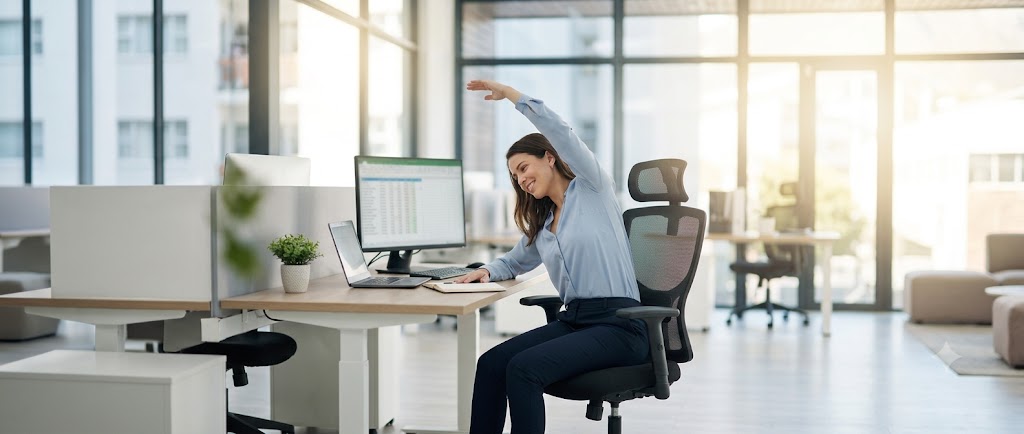
In today’s fast-paced corporate world, working a standard office job often translates to sitting in the exact same position for hours on end, staring at a computer screen. This increasingly sedentary lifestyle has become a leading cause of chronic discomfort and musculoskeletal issues globally. If you find yourself experiencing persistent stiffness, soreness, or sharp twinges in your lumbar region, it is important to know that you are certainly not alone in this struggle.
Millions of professionals worldwide battle with lumbar discomfort daily, often believing it is just a normal part of aging or working hard. However, the good news is that you absolutely do not need an expensive gym membership, a personal trainer, or even a full hour of free time to find meaningful, lasting relief. By practicing chair yoga for desk workers, you can significantly improve your posture, increase your flexibility, and enhance your overall well-being right from your workspace.
In this comprehensive and deeply detailed guide, we will explore the underlying mechanical and biological causes of office-related physical strain. More importantly, we will introduce you to highly effective lower back pain stretches at desk. These specific routines are specifically designed to be performed in your standard office chair, requiring absolutely no special equipment, athletic wear, or prior experience with flexibility training. Furthermore, we will delve into deeply therapeutic seated yoga poses for back pain that target the exact muscle groups most negatively affected by prolonged sitting. By the time you finish reading this article, you will have acquired a practical, actionable toolkit to transform your daily workday and proactively protect your long-term spinal health.
Understanding the Problem: Why Desk Jobs Cause Severe Lumbar Discomfort
From an evolutionary standpoint, human bodies were simply not designed to sit rigidly in chairs for eight to twelve hours a day. Our anatomy is built for movement, walking, and dynamic resting postures. When we sit in a modern office chair, the natural, healthy ‘S’ curvature of the spine is often heavily compromised. As fatigue sets in during the day, we naturally tend to slouch, rounding our shoulders forward, collapsing our chest inwards, and pushing our neck towards the monitor in what is known as “forward head posture.” This poor alignment puts immense, unnatural pressure on the lumbar vertebrae and forces the surrounding stabilizing muscles to work overtime just to keep you upright.
Over time, the physiological consequences become pronounced. The hip flexors—the muscles located at the front of your hips—become chronically short and tight. Simultaneously, the gluteal muscles and the core musculature weaken due to pure inactivity, a condition some experts casually refer to as “gluteal amnesia.” This severe muscular imbalance is the primary culprit behind the deep aches and sharp pains you feel at the end of a long workday.
Implementing lower back pain stretches at desk helps effectively counteract these negative effects by intentionally elongating those shortened, tight muscles and consciously engaging the dormant, weakened ones. Regular movement throughout the day dramatically increases blood circulation, delivering essential oxygen and vital nutrients to fatigued tissues while flushing out metabolic waste products that cause soreness.
What is This Practice and Why is it So Highly Effective?
This mindful movement practice is a highly modified form of traditional physical postures, thoughtfully adapted so they can be performed entirely while seated or while using a chair for support. This brilliant adaptation makes the immense benefits of mindfulness, deep breathing, and therapeutic stretching accessible to absolutely anyone, regardless of their age, baseline flexibility, body size, or physical location. The true beauty and genius of chair yoga for desk workers lies in its sheer, unmatched convenience. You can seamlessly integrate these movements into the busiest of corporate schedules, taking just a few brief minutes between back-to-back video meetings, during a quick screen break, or even while reading a lengthy email.
The clinical effectiveness of these routines lies in their gentle, targeted, and non-competitive approach. Rather than forcing or straining the body into advanced pretzel-like shapes, seated yoga poses for back pain work gently with your body’s current range of motion. They place a massive emphasis on deep, conscious diaphragmatic breathing, which biologically activates the parasympathetic nervous system (your body’s “rest and digest” mode). This activation rapidly reduces cortisol and other stress hormones in the bloodstream, which are often heavily responsible for subconscious muscle tension and clamping. By combining intentional breath with mindful, deliberate movement, you create a powerful holistic remedy for workplace fatigue and chronic pain.
Preparing for Your Routine: Setting Up Your Workspace
Before you eagerly dive into your lower back pain stretches at desk, it is incredibly important to take a few moments to set up your environment to ensure both safety and maximum success. First, ensure you are sitting on a sturdy, stable surface. If your office chair has wheels, make sure to lock them securely, or physically press the back of the chair against a solid wall or heavy desk so it absolutely does not roll away while you are stretching. Sit forward slightly on the seat pan so that your back is not passively resting against the backrest; this forces your core muscles to engage and support your spine naturally.
Plant your feet completely flat on the floor, perfectly parallel and hip-width apart. If your legs are shorter and your feet do not comfortably reach the floor, place a few sturdy books, a small step stool, or a yoga block underneath them to create a solid foundation. Take a quiet moment to mentally ground yourself before moving. Close your eyes softly, relax your jaw, and take three very deep, slow breaths—inhaling completely through your nose, filling your belly like a balloon, and exhaling audibly through your mouth. This simple act of psychological centering effectively prepares both your conscious mind and your physical body for the movements ahead.
The 5 Simple Stretches for Maximum Relief
1. The Spinal Warm-Up (Seated Cat-Cow) The traditional Cat-Cow stretch is universally considered a fundamental movement for overall spinal health and longevity. It gently massages the individual vertebrae, stimulates the kidneys and adrenal glands, and creates a sense of emotional balance and physical fluidity.
- Detailed Instructions: Sit up very tall with your feet flat and your hands resting lightly on your knees or upper thighs. As you take a slow, deep inhale, arch your spine gently forward, consciously roll your shoulder blades down and back, push your chest out proudly, and lift your chin to look gently toward the ceiling (this is the Cow position). As you begin a slow exhale, round your spine backward toward the chair, firmly tuck your chin to your chest, scoop your belly button in toward your spine, and let your shoulders roll forward (this is the Cat position). Repeat this flowing motion for 5 to 10 full breath cycles.
- Why it is highly effective: This continuous, rhythmic flow brings immediate, nourishing hydration to the intervertebral discs, acting like a sponge soaking up water. For those incorporating chair yoga for desk workers into their daily office routine, this is universally considered the absolute perfect starting point to safely wake up a stiff, dormant spine.
2. The Deep Hip Opener (Seated Pigeon Pose) Excessively tight hips are directly and mechanically linked to severe lumbar strain. When the hip rotators are tight, the pelvis naturally tilts in an incorrect, anterior manner, putting a heavy, unnatural burden on the lower spine vertebrae.
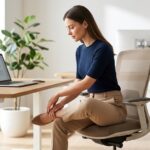
- Detailed Instructions: While sitting tall on the edge of your seat, lift your right leg carefully and place your right ankle directly over your left thigh, resting just above the knee cap. It is absolutely crucial to keep your right foot actively flexed (toes pointing toward the shin) to lock and protect the delicate hinge joint of your right knee. If you feel a deep stretch in your right hip or glute here, simply hold this upright position and breathe. For a significantly deeper stretch, keep your spine perfectly straight and gently hinge forward at the hip creases, leading with your chest rather than your chin. Hold this intense but relieving stretch for 5 to 10 slow, deep breaths, then gently release and switch to the left side.
- Why it is highly effective: This is widely regarded by physiotherapists as one of the most powerful and necessary lower back pain stretches at desk because it directly targets the piriformis muscle and the deep gluteal rotators, muscles that become notoriously tight, shortened, and painful from prolonged periods of sitting.
3. The Ultimate Tension Releaser (Seated Spinal Twist) Twisting motions are absolutely excellent for wringing out deep muscular tension, improving sluggish digestion, and actively restoring the spine’s natural, healthy range of rotational motion.
- Detailed Instructions: Sit facing forward with a very tall, straight spine. Take a massive inhale to lengthen the crown of your head toward the ceiling. As you exhale, gently and smoothly twist your torso to the right side. You can place your left hand on the outside of your right knee for gentle leverage, and hook your right arm over the back of the chair for support. Gently turn your neck to look over your right shoulder, but do not force the neck. With every inhale, try to grow a millimeter taller; with every exhale, see if you can twist a millimeter deeper. Hold for 5 full breaths, slowly untwist back to center, and repeat precisely on the left side.
- Why it is highly effective: This rotational movement actively relieves the stubborn stiffness that chronically accumulates in the mid-thoracic and lower lumbar back. Incorporating such seated yoga poses for back pain ensures your spine remains incredibly supple, well-lubricated, and structurally healthy throughout the entirety of a stressful workday.
4. The Complete Decompression (Seated Forward Fold) A deep forward fold is profoundly calming for the central nervous system. It acts as an incredible reset button for your brain while providing a profound, lengthening stretch for the entire back line of your body.
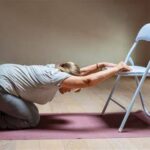
- Detailed Instructions: Sit somewhat forward on your chair to ensure you have room to move, with your feet planted flat and wide on the floor. Take a deep breath in, sitting as tall as possible. As you exhale, slowly hinge at the hips and fold your entire torso forward over your thighs. Let your head, neck, and arms hang completely heavy toward the floor, releasing all control. If this feels too intense, you can optionally rest your forearms comfortably on your thighs instead of dangling. Breathe deeply and directly into the back of your ribcage, actively allowing gravity to decompress your spine. Hold this deeply relaxing posture for 30 to 60 seconds, then press firmly into your feet and slowly roll up, restacking one vertebra at a time until your head comes up last.
- Why it is highly effective: This exact posture completely reverses the brutal, ongoing downward compression caused by gravity and hours of sitting upright. It is a fundamental staple in chair yoga for desk workers because it provides nearly instant physical relief, decompresses the lumbar discs, and induces a profound sense of mental calm and clarity.
5. The Side Body Lengthener (Seated Side Stretch) In our daily linear lives, we almost entirely forget to stretch the lateral sides of our bodies. However, the internal and external obliques, as well as the massive latissimus dorsi muscles, play a huge, vital role in bracing and supporting the spine.
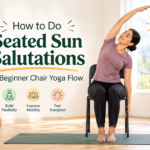
- Detailed Instructions: Sit up impeccably straight with equal weight on both sitting bones. Inhale deeply and raise your right arm perfectly straight up toward the ceiling, keeping the shoulder blade dropped down away from the ear. As you exhale, gently and smoothly bend your entire torso to the left side. You can hold securely onto the left edge of your chair seat with your left hand to maintain complete stability. It is vital to keep your right hip and right sit bone firmly rooted down into the chair, rather than letting it lift. Send your breath deeply into the right side of your ribcage, feeling the ribs manually separate and stretch. Hold for 5 deep breaths, slowly return to center, lower the arm, and repeat on the opposite side.
- Why it is highly effective: By actively creating physical space between the bottom ribs and the top of the pelvis, you effectively alleviate chronic side-body compression. This crucial movement completes our essential list of seated yoga poses for back pain, ensuring that the spinal column has been thoroughly mobilized in all its natural directions.
How to Integrate These Therapeutic Movements into Your Busy Workday
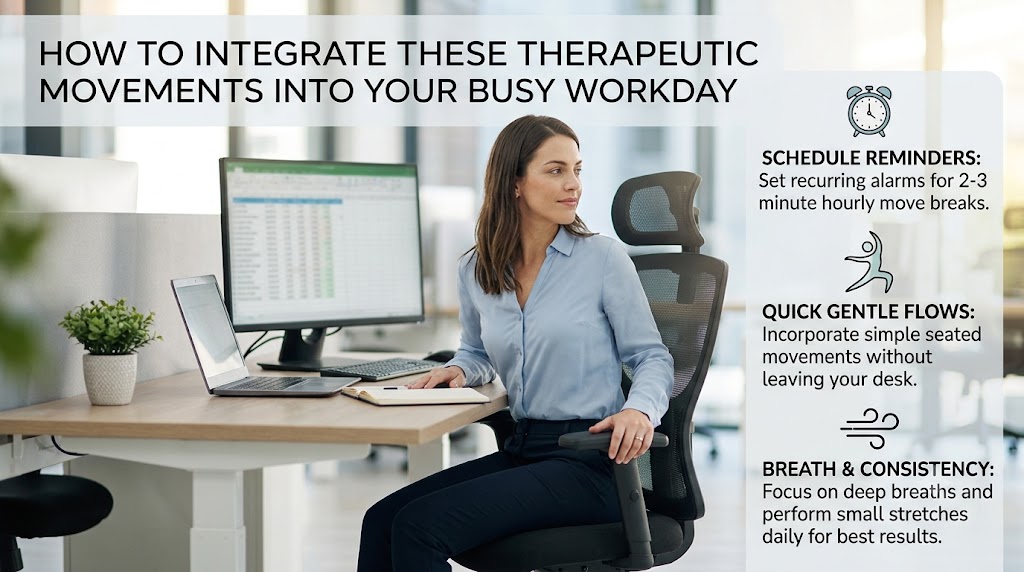
Merely knowing how to perform these stretches is realistically only half the battle; the real, life-changing magic happens through dedication and consistency. To truly reap the compounding physical benefits, you absolutely need to make it an automatic daily habit.
Consider heavily utilizing technology to help you. Set a recurring timer or calendar alert on your smartphone, smartwatch, or computer desktop to chime every 60 to 90 minutes. When that specific timer goes off, force yourself to pause your current task, adjust your seated posture, and perform just one or two of the movements detailed above. You absolutely do not need to do the entire five-pose sequence all at once to see benefits. Habit stacking is another incredibly excellent psychological strategy.
By actively breaking up your long, uninterrupted sedentary periods with chair yoga for desk workers, you effectively prevent muscular tension from accumulating in the first place. This proactive, preventative approach is monumentally more effective and less painful than desperately trying to aggressively stretch out eight solid hours of accumulated, rock-hard stiffness at the very end of the day when you are already exhausted.
The Incredible Long-Term Benefits for Corporate Professionals
The scientifically backed advantages of maintaining a regular, disciplined stretching routine at the office extend far, far beyond just immediate physical pain relief. Numerous ergonomic and workplace health studies have conclusively shown that taking brief, mindful movement breaks significantly enhances cognitive function, improves deep focus, and massively boosts overall daily productivity.
Furthermore, actively engaging in lower back pain stretches at desk can drastically reduce employee absenteeism related to severe musculoskeletal disorders, which cost companies billions annually. It is a supreme form of radical self-care that boldly empowers you to take direct, personal control of your physical health in a corporate environment that often unintentionally discourages healthy movement. By regularly practicing these seated movements, you are making a vital, compounding investment in your long-term mobility, joint health, and overall quality of life well into retirement.
Frequently Asked Questions (FAQs)
1. Can I do these stretches in normal, everyday work clothes, or do I need athletic wear? Absolutely, yes. One of the single greatest, most practical advantages of chair yoga for desk workers is that it requires absolutely no special apparel whatsoever. The intentional movements are specifically designed to be incredibly gentle and highly adaptable, meaning you can easily and comfortably perform them in professional attire without ever breaking a sweat or feeling physically restricted.
2. Realistically, how often should I stretch during an 8-hour workday to see real results? For the most optimal, pain-relieving results, you should ideally aim to move your body for about 2 to 3 minutes every single hour. Even if you only manage to take a few deep breaths and execute a very quick spinal twist, breaking up long, static periods of sitting is utterly crucial. Consistency is the master key.
3. Are these specific movements truly safe if I already have a pre-existing spinal injury? While these modified routines are generally considered very safe and gentle, it is always strongly recommended to consult with a licensed healthcare professional or physical therapist before starting any new physical regimen, especially if you have a known history of severe spinal issues. Always strictly listen to your own body’s signals and absolutely never push a stretch into a zone of sharp pain.
4. Will doing these stretches help me improve my terrible posture over time? Yes, without a doubt. Poor posture is almost always the direct result of muscle imbalances—specifically, tight chest muscles pulling you forward and weak back muscles failing to hold you upright. By consistently practicing these routines, you naturally and gradually pull your skeletal structure back into proper, healthy alignment.