If you spend eight to ten hours a day staring at a computer screen, you probably know the feeling. It usually starts as a dull ache in your lower back around 2 PM. By the time you log off, that ache might have traveled down your leg, or your spine feels as stiff as a wooden board.
Long hours of sitting are notorious for wrecking our posture and causing severe discomfort. But what if you don’t have the time to roll out a yoga mat in the middle of your workday?
That’s exactly where chair yoga for lower back pain comes to the rescue. You don’t need a studio, expensive gear, or even to change out of your work clothes. By integrating a few strategic movements right at your desk, you can relieve tension, prevent nerve compression, and feel significantly better by the end of your shift.
In this guide, we are going to explore why your desk job is hurting your back and, more importantly, walk you through the most effective seated stretches for sciatica relief and general lower back stiffness.
Why Prolonged Sitting Hurts Your Lower Back
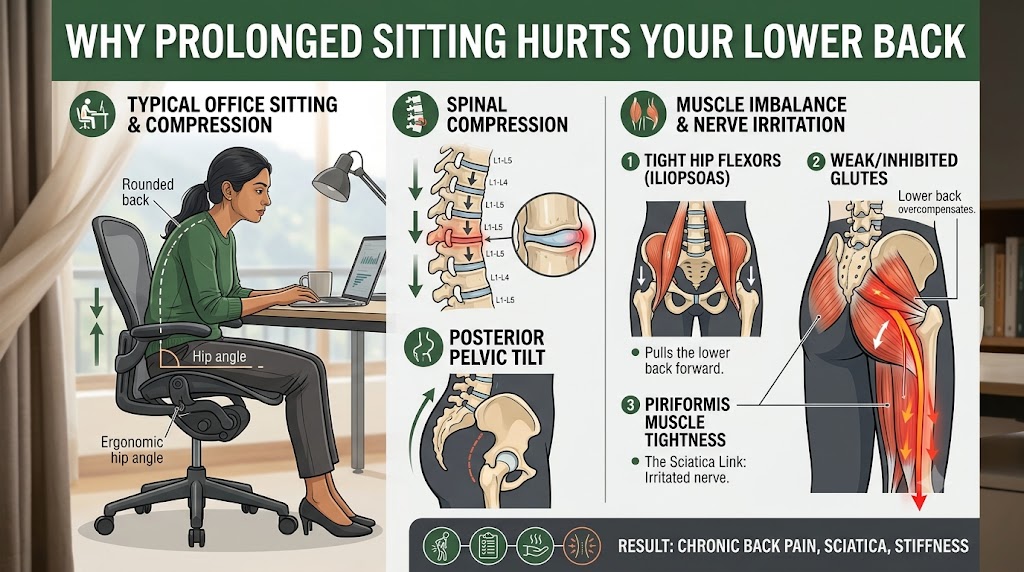
Before we jump into the stretches, it helps to understand exactly what happens to your body when you sit in an office chair all day.
Human bodies are designed to move. When we sit for prolonged periods, several negative things happen simultaneously:
- Hip Flexors Tighten: The muscles at the front of your hips become short and tight, which pulls on your pelvis and creates an unnatural arch in your lower back.
- Glutes Weaken: Your glute muscles basically go to sleep when you sit. Weak glutes mean your lower back has to work overtime to support your torso.
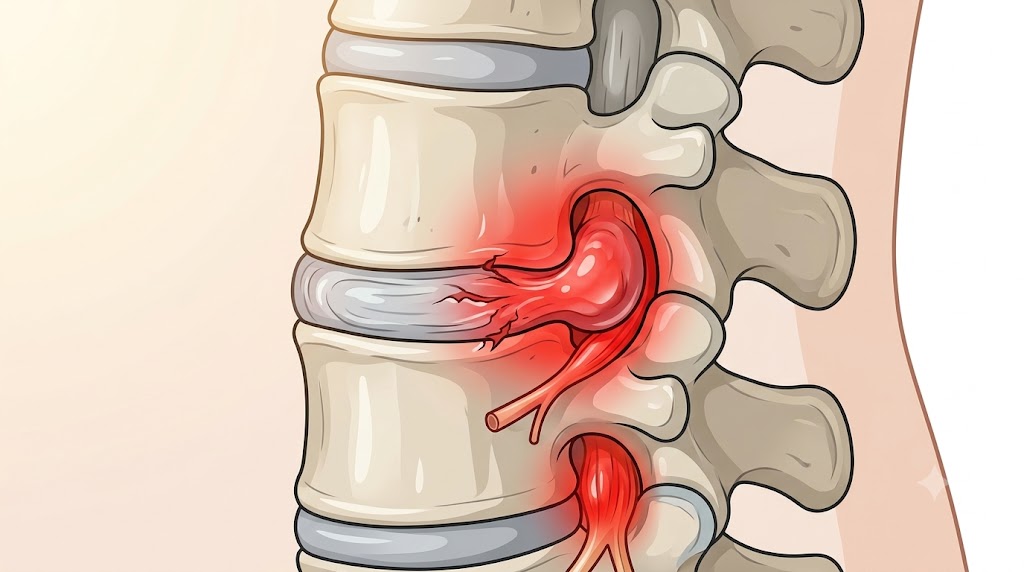
- Spinal Compression: Sitting places more pressure on your spinal discs than standing. Over time, this compression can lead to bulging discs or irritate the sciatic nerve, causing sharp pain radiating down your legs.
This combination of tight hips, weak glutes, and spinal compression is the perfect recipe for chronic pain.
What is Chair Yoga and How Can It Help?
Chair yoga is exactly what it sounds like: a modified version of traditional yoga done while seated in a chair, or using the chair for support. It takes the fundamental principles of yoga—mindful breathing, gentle stretching, and physical awareness—and makes them accessible to anyone, anywhere.
For desk workers, chair yoga is a game-changer. Practicing chair yoga for lower back pain helps gently decompress the spine, stretch out those shortened hip flexors, and encourage blood flow to stiff muscles. It is also an incredibly effective way to manage sciatica flare-ups without needing to lie down on the floor.
7 Gentle Seated Stretches for Sciatica Relief and Stiffness
Ready to find some relief? Slide to the edge of your Chair yoga for lower back pain so your feet are flat on the floor. Make sure your chair is stable (if it has wheels, lock them or push it against a desk). Breathe deeply through your nose, and let’s begin.
1. Seated Cat-Cow (Spinal Mobility)
This is a classic yoga pose modified for the chair. It warms up the spine and relieves tension in the mid and lower back.
- How to do it: Sit up straight with your hands resting on your knees. As you inhale, arch your back, roll your shoulders down, and look up toward the ceiling (Cow Pose). As you exhale, round your spine, tuck your chin to your chest, and pull your belly button inward (Cat Pose).
- Reps: Repeat this fluid motion 5 to 8 times, moving in sync with your breath.
- Why it works: It massages the spinal discs and relieves stiffness from hunching over a keyboard.
2. Seated Figure-Four Stretch (The Ultimate Sciatica Reliever)
If you are looking for specific seated stretches for sciatica relief, this is the holy grail. It targets the piriformis muscle deep in the glutes, which often spasms and presses against the sciatic nerve.
- How to do it: Keep your left foot flat on the floor. Lift your right leg and place your right ankle on top of your left knee (your legs should look like the number 4). Keep your spine straight. If you already feel a stretch, stay here. For a deeper stretch, gently hinge forward from your hips (don’t round your back).
- Time: Hold for 30 to 60 seconds, breathing deeply. Switch sides.
- Why it works: It opens the hips and directly stretches the glutes, immediately taking the pressure off the sciatic nerve.
3. Seated Spinal Twist (Releasing Mid-Back Tension)
Twists are fantastic for “wringing out” tension in the torso and improving spinal mobility.
- How to do it: Sit tall. Take a deep breath in. As you exhale, twist your Chair yoga for lower back pain torso to the right. Place your left hand on your right knee, and your right hand on the back of your chair for support. Look gently over your right shoulder.
- Time: Hold for 5 deep breaths. Chair yoga for lower back pain Slowly return to the center and repeat on the left side.
- Why it works: Twisting helps hydrate the spinal discs and stretches the muscles running alongside the spine.
4. Seated Forward Fold (Full Back Decompression)
When your lower back feels compressed and tight, letting gravity do the work is incredibly soothing.
- How to do it: Open your legs slightly wider than hip-width apart. Take a deep breath in, and as you exhale, slowly fold your torso forward over your thighs. Let your hands dangle toward the floor and let your head and neck hang completely heavy.
- Time: Stay here for 5 to 10 deep, slow breaths. To come up, use your hands to press up slowly so you don’t get dizzy.
- Why it works: It stretches the entire back line of your body, from your neck down to your lumbar spine, providing instant decompression.
5. Seated Knee-to-Chest Stretch (Lumbar Relief)
This is a simple, comforting stretch that mimics the fetal position, offering great relief for a tired lower back.
- How to do it: Sit up straight. Interlace your fingers just below your right knee. Slowly pull your right knee up toward your chest while keeping your back as straight as possible.
- Time: Hold for 30 seconds, rotating your ankle while you’re there for a bonus stretch. Switch legs.
- Why it works: It gently lengthens the lower back muscles and provides a mild stretch to the glutes.
6. Chair-Supported Side Stretch
We often forget about the muscles on the sides of our torso (the obliques and the QL muscle), which can heavily contribute to lower back pain when tight.
- How to do it: Sit tall. Let your right arm hang down by your side. Inhale and reach your left arm straight up toward the ceiling. Exhale and gently lean over to the right. Keep both of your sitting bones firmly planted on the chair.
- Time: Hold for 3 to 5 breaths, then switch sides.
- Why it works: It opens up the ribcage and stretches the lateral muscles that connect the ribs to the pelvis.
7. Seated Hamstring Stretch
Tight hamstrings pull directly on the pelvis, which in turn strains the lower back. Stretching them is vital for lower back health.
- How to do it: Sit near the edge of your chair. Extend your right leg out straight in front of you, with your heel on the floor and toes pointing up. Keep your left foot flat on the floor. Sit tall, take a breath, and hinge slightly forward from the hips until you feel a stretch in the back of your right leg.
- Time: Hold for 30 seconds, then switch sides.
- Why it works: Releasing the hamstrings removes the downward pull on your lower back.
Creating a 5-Minute Desk Yoga Routine
Reading about these stretches is great, Chair yoga for lower back pain but the magic happens when you build a habit. You don’t need to do all seven stretches every single time. Here is a quick 5-minute routine you can do twice a day (e.g., at 11 AM and 3 PM):
- Minute 1: Start with the Seated Cat-Cow to wake up the spine.
- Minute 2-3: Move into the Seated Figure-Four Stretch (1 minute per leg) to target sciatica and hip tightness.
- Minute 4: Do the Seated Spinal Twist (30 seconds per side).
- Minute 5: Finish with a Seated Forward Fold to completely relax the lower back.
Set a silent alarm on your phone or use a Pomodoro timer on your browser to remind you to take these micro-breaks.
Lifestyle Tips to Prevent Lower Back Pain at Work
While practicing chair yoga for lower back pain is highly effective, it is just one part of the puzzle. To keep pain at bay permanently, pay attention to your daily habits:
- Optimize Your Ergonomics: Your screen should be at eye level. Your chair should support the natural curve of your lower back, and your feet should be flat on the floor. If your feet don’t reach, get a small footstool.
- The 20-20-20 Rule: Every 20 minutes, look at something 20 feet away for 20 seconds. While you do this, do a quick posture check. Are you slouching?
- Stay Hydrated: Your spinal discs are mostly made of water. Dehydration can lead to disc shrinkage and stiffness. Keep a water bottle at your desk.
- Walk When You Can: Take phone calls standing up. Walk to your colleague’s desk instead of messaging them. Every bit of movement counts.
When to See a Professional
While chair yoga is fantastic for muscular tension and mild nerve irritation, it’s not a substitute for medical advice. You should consult a doctor or physical therapist if you experience:
- Numbness or tingling that spreads below your knee.
- Loss of bowel or bladder control.
- Pain that is sharp, sudden, and unbearable.
- Lower back pain that wakes you up at night.
Wrapping It Up
You don’t have to accept lower back stiffness and sciatica as a mandatory part of having a desk job. By incorporating chair yoga for lower back pain into your daily routine, you are taking proactive steps to protect your spine.
Frequently Asked Questions (FAQs)
Can chair yoga really cure lower back pain? Chair yoga is not a “cure-all,” but it is highly effective at relieving pain caused by muscular tightness, poor posture, and prolonged sitting. It helps manage symptoms and prevents future flare-ups.
How often should I do chair yoga at work? For the best results, aim for a 3 to 5-minute stretch break every 1 to 2 hours. Consistency is more important than duration.
Is it safe to do seated stretches if I have sciatica? Yes, gentle stretches like the Seated Figure-Four are generally very safe and highly recommended for sciatica. However, you should never push into sharp pain. If a stretch makes your nerve pain worse, stop immediately.
Do I need a special ergonomic chair to do these stretches? No! Any stable chair will work. In fact, a standard, firm dining chair or an office chair with the wheels locked is perfectly fine. Avoid couches or chairs that are too soft, as you need a firm base for proper alignment.
1 thought on “Chair Yoga for Lower Back pain: Gentle Stretches to Ease Sciatica and Stiffness While Working”